Samburu Women Trust (SWT) is led by a visionary team of Indigenous women leaders rooted in pastoralist and minority communities across northern Kenya. Guided by Indigenous values, collective wisdom, and feminist principles, SWT's Board of Trustees is composed entirely of women who embody strength, resilience, and cultural pride.
Each board member brings unique expertise in governance, human rights, traditional healing, peacebuilding, and community mobilization. Together, they provide strategic direction, ensure accountability, and uphold SWT's mission to advance the rights, leadership, and wellbeing of Indigenous women and girls.

A respected Indigenous woman leader from pastoralist communities and serves as the Chairperson of the Samburu Women Trust (SWT) Board of Trustees. A passionate advocate for Indigenous women's rights and cultural preservation.She brings a wealth of experience in governance, community mobilization, fundraising, and advocacy for gender equality. Instrumental in strengthening Indigenous women's leadership at grassroots and national levels, she has fostered collaboration across regions. Her deep understanding of Indigenous cultures and unwavering commitment to justice make her a guiding voice in shaping SWT's vision and strategic direction.

A proud Rendille woman, from one of Kenya's minority Indigenous communities.She is a celebrated women's human rights defender and the 2016 Human Rights Defender of the Year Award recipient for her outstanding advocacy for girls' rights, women's empowerment, and peacebuilding among pastoralist communities. With years of experience in sexual and reproductive health rights (SRHR), education, and community development, Rose continues to champion the women and girls' agenda across northern Kenya. She made history as the first woman elected to her community's Land Committee Board, breaking barriers in traditionally male-dominated spaces. Her leadership reflects resilience, wisdom, and the belief that empowering Indigenous women transforms entire communities.

Represents the El Molo community from Loiyangalani, one of Kenya's smallest and most endangered Indigenous groups.She is the first woman to challenge the Lake Turkana Wind Power project for violating the principle of Free, Prior, and Informed Consent (FPIC). A cultural knowledge holder, teacher, and community organizer, she plays a vital role in revitalizing Indigenous languages and traditions while advocating for the socio-economic inclusion of minority Indigenous women. Her dedication to education and cultural preservation has inspired many within and beyond her community. Teresalba's voice brings diversity, wisdom, and strength to the SWT Board, embodying the organization's commitment to inclusion and inter-community solidarity.

Indigenous feminist leader, human rights defender, and founding Executive Director of Samburu Women Trust (SWT).As Secretary to the Board of Trustees, she plays a key role in guiding the organization's governance and strengthening accountability between the Board and the Secretariat. She also serves on several key governance bodies, including the UN Voluntary Fund for Indigenous Peoples Board of Trustees, the Defenders Coalition Board, and the Wildlife Conservation Trust Fund Board, where she continues to champion Indigenous peoples' rights and environmental justice. Jane is passionate about advancing the rights and leadership of Indigenous women and girls. Through her vision and dedication, she helped establish the Indigenous Women Council (IWC), a powerful platform that connects and amplifies Indigenous women's voices across Africa. Grounded in her lived experiences and deep cultural roots, Jane continues to champion equality, justice, and Indigenous women's empowerment — inspiring others to believe in the power of resilience, sisterhood, and transformative leadership.

She is a courageous Pokot woman leader and seasoned advocate for community governance and women's rights.She is the first woman elected as councillor at age 22 in Baringo County. Julia has played a key role in advancing policies that promote pastoralist livelihoods and women's empowerment. Her leadership in grassroots mobilization and inter-community peace dialogues has been pivotal, including rescuing over 100 girls from early marriage, FGM, and gender-based violence, and securing their access to safe spaces and education. Julia's leadership reflects courage, compassion, and an unshakable commitment to empowering Indigenous women to reclaim their voices and leadership.
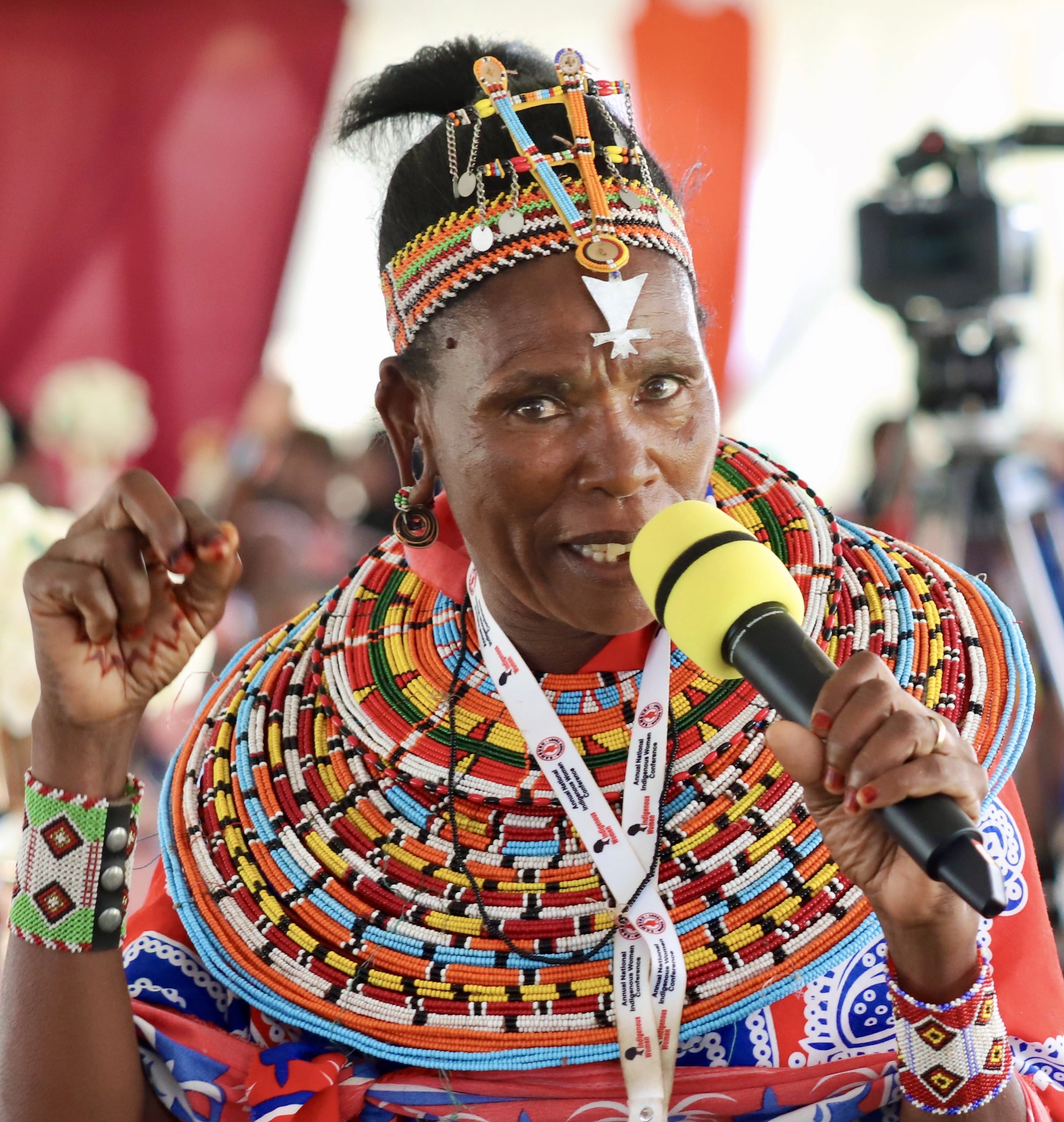
She is a traditional midwife, healer, anti-FGM champion, and motivational speaker from the Maasai community.Her life's journey is one of courage and conviction — she made the bold decision to protect her daughter from undergoing FGM in a deeply patriarchal society where such defiance is rare and often punished. Through her advocacy, healing practices, and mentorship, Helen promotes dignity, safety, and the wellbeing of women and girls. She continues to inspire and mentor young women and traditional birth attendants, bridging Indigenous knowledge with modern approaches to reproductive health, women's rights, and cultural transformation.