
For many Indigenous women-led grassroots organizations, the challenge is not a lack of ideas.
Across rural communities, women are already organizing, solving problems, supporting families, protecting their environments and developing initiatives that respond directly to the realities around them.
The challenge is often access to resources.
Traditional funding systems can be difficult for small, informal and community-based movements to navigate. Requirements around registration, documentation, institutional systems and financial procedures can unintentionally exclude the very women and grassroots movements that need support the most.
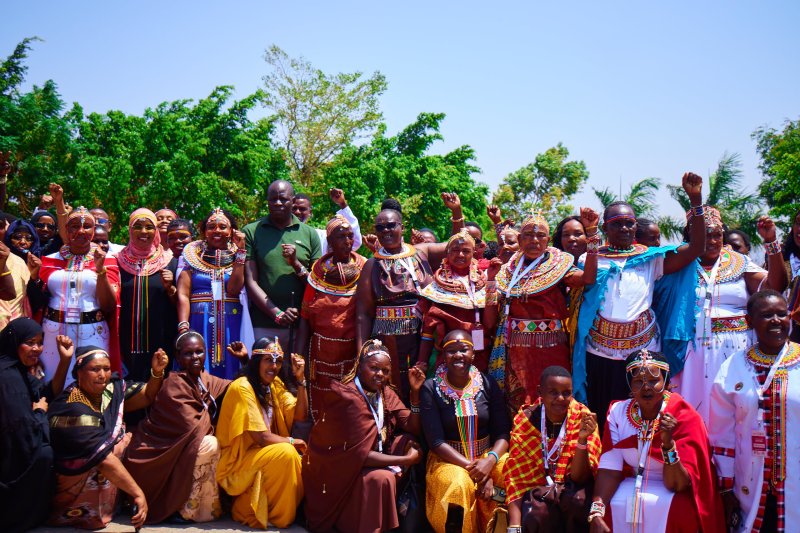
This gap was one of the important issues highlighted through the NAAPU Indigenous Women Fund during the 12th Annual National Indigenous Women Conference 2026.
Changing the way resources reach women
NAAPU was established with a clear purpose: to support Indigenous women at the grassroots level to access resources and advance initiatives that are often overlooked by conventional funding mechanisms.
Rather than expecting rural women-led movements to navigate systems that were not designed around their realities, the fund seeks to take resources closer to the women and communities themselves.
This approach aligns with the conference’s call for Indigenous women-led financing and sustainable investment pathways that strengthen community resilience and movement sustainability through trust-based and locally governed funding mechanisms.
“They came to look for us.”
For NAAPU grantee Mama Vincent, the experience represented something different.
Speaking during the conference, she reflected on how NAAPU reached women in their rural communities and identified small women-led initiatives that were already working to improve their communities and households.
Her story captures the significance of funding that begins with trust.
Through support received, her community was able to establish a women’s home, water tanks and water systems within their manyatta.
For her, the impact went beyond the physical infrastructure.
It changed how women were perceived.
The initiative demonstrated to the wider community that women could organize resources, develop solutions and lead meaningful change.
Funding as a pathway to leadership
The significance of Indigenous women-led financing extends beyond individual projects.
When women have access to resources, they gain greater capacity to organize, participate in decision-making and influence issues affecting their communities.
This is why Indigenous women-led financing is closely connected to economic justice, leadership and self-determination.
The conference identifies direct financing, Indigenous women’s funds, entrepreneurship, economic resilience and community-led development as important pathways for strengthening Indigenous women’s leadership.
Trusting women to lead their own solutions
The experience of NAAPU demonstrates an important principle: communities already have knowledge of their challenges and often have ideas about how to solve them.
What they need is an enabling environment, partnerships and resources that allow those ideas to grow.
For grassroots Indigenous women, funding should therefore not only be about supporting a project.
It should be about trusting women’s leadership, strengthening movements and creating opportunities for communities to determine their own priorities.
From beneficiaries to leaders
The future of Indigenous women-led development requires a shift in how women are viewed.
They are not simply beneficiaries waiting for solutions.
They are already organizers, entrepreneurs, advocates, caregivers, environmental stewards, peacebuilders and community leaders.
The 12th Annual National Indigenous Women Conference created an important platform for this message to be heard: Indigenous women need systems that recognize their leadership, trust their solutions and invest directly in their movements.
Because when resources reach the grassroots, women do not simply receive support—they turn resources into change.