
Climate change and humanitarian crises disproportionately affect indigenous women and girls. Yet too often, responses are designed without consulting the very communities most impacted. At Samburu Women Trust, we believe that indigenous women are not merely beneficiaries of aid—they are leaders, innovators, and decision-makers whose lived realities must shape climate adaptation and humanitarian responses.
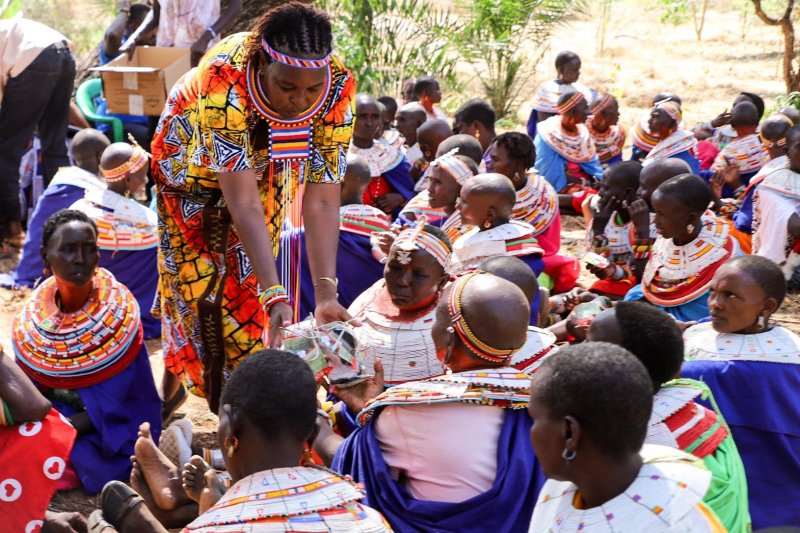
Through a community-led approach, our team engaged with women’s networks, village leaders, women’s groups, and vulnerable households across Lower Kipsing villages in Oldonyiro Sub-County, Isiolo County. We listened carefully to women’s priorities, challenges, and aspirations to understand what solutions would best strengthen their resilience during humanitarian crises and climate-related shocks.
The women identified a simple but transformative solution: solar-powered d-lights. Rather than imposing external interventions, we supported the priorities that women themselves designed and agreed upon.
The impact of these lights extends far beyond illumination. Women explained that access to light at night helps reduce risks of sexual and gender-based violence (SGBV) within households and villages. School-going girls can safely complete their homework after dark, improving their educational opportunities. Families can better protect their livestock by deterring predators that often threaten livelihoods at night. Women with disabilities, elderly women, and other vulnerable groups experience greater safety and mobility, reducing their exposure to violence and other protection risks.
These solutions demonstrate an important lesson for funders and humanitarian actors: the most effective investments are those grounded in lived realities and driven by community priorities. Indigenous women understand their contexts, challenges, and opportunities better than anyone else. When their voices are centered, solutions are practical, sustainable, and impactful.
By choosing to invest in what women want, need, and prioritize. By centering indigenous women's voices in decision-making, they are helping to build stronger, safer, and more climate-resilient communities.
Today, we support 10 women’s group networks, with more than 400 women across the Lower Kipsing villages in Oldonyiro Sub-County, Isiolo County
Their leadership reminds us that meaningful climate adaptation and humanitarian response begin with listening, trusting communities, and investing in locally led solutions.
The future of climate resilience lies in recognizing indigenous women not as recipients of change, but as architects of the solutions their communities need.