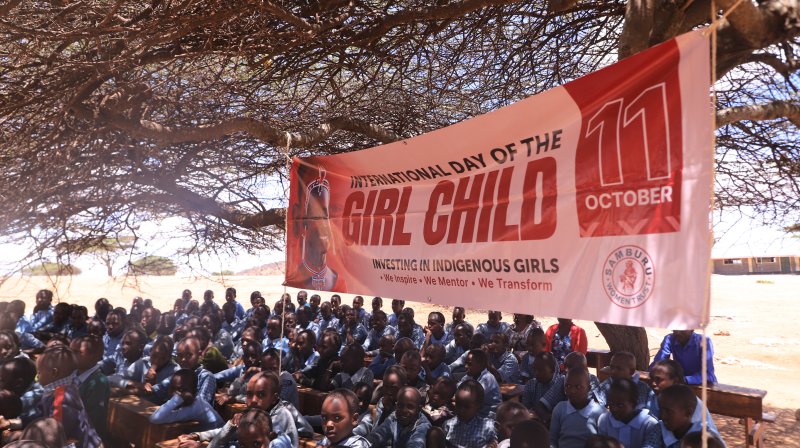

Pastoralist girls deserve more than protection from harm. They deserve the freedom to learn, the dignity to live without fear, and the power to shape their own futures.
Yet many face barriers that threaten their education, safety, health, and freedom to choose their own paths.
This International Day of the Girl Child, Samburu Women Trust (SWT) calls for a shift from seeing pastoralist girls as vulnerable beneficiaries to recognising them as rights holders, knowledge holders, and leaders of change.
Beyond vulnerability
Limited access to education and healthcare, child marriage, female genital mutilation (FGM), gender-based violence, poverty, and climate-related shocks continue to challenge the well-being of many pastoralist girls.
Long distances to school, inadequate infrastructure, and drought-related pressures can interrupt education and increase girls' workloads. These challenges demand urgent action, but they should never define a girl's potential.
A pastoralist girl is not simply someone to protect. She is someone whose rights must be respected, whose voice must be heard, and whose future must remain her own.
But culture must never be used to justify practices that harm girls or deny them their rights. Ending FGM, child marriage, and gender-based violence requires community-led action, intergenerational dialogue, and the leadership of Indigenous women and girls.
We must reject the false choice between cultural identity and human rights. Every girl deserves to celebrate her heritage while growing up free from violence and discrimination.
Protecting girls is essential, but protection alone is not enough.
Pastoralist girls need quality education, accessible healthcare, safe spaces, and opportunities to participate in decisions affecting their lives.
Education systems must also respond to pastoralist realities, including mobility, distance, and climate-related disruptions.
Their voices belong in conversations about culture, land, climate action, education, and community development. They should help shape solutions, not simply share their experiences.
Protection should create the conditions for freedom, not become a substitute for it.
Climate justice includes-
Drought, displacement, and pressure on natural resources can disrupt pastoralist livelihoods and increase the burdens girls carry. Yet these girls also hold knowledge that can contribute to environmental stewardship and community resilience.
Their perspectives must be included in climate adaptation, land governance, and decisions affecting Indigenous territories. A just and resilient future requires their meaningful participation.
SWT's call to action
Samburu Women Trust calls on governments, development partners, communities, and families to:
1. Invest in accessible education, healthcare, and child protection services.
2. Strengthen efforts to end FGM, child marriage, and gender-based violence.
3. Fund Indigenous women-led and community-led initiatives advancing girls' rights.
4. Create meaningful opportunities for girls to influence decisions and lead change.
5. Protect positive cultural values while challenging harmful practices.
These commitments must translate into action, resources, and accountability.
Her future cannot wait
We cannot claim to advance gender equality while pastoralist girls face violence, discrimination, and limited choices. Nor can we protect Indigenous heritage while excluding girls from shaping its future.
At SWT, we believe every pastoralist girl deserves dignity, opportunity, cultural pride, and the freedom to determine her own future.
This International Day of the Girl Child, let us move beyond promises. Let us listen to girls, invest in their rights, and recognise their leadership.
Her rights cannot wait. Her dreams deserve investment. Her future must be hers to shape.